We're different.
We built our services specifically for the beautiful chaos of NHS agency operations.
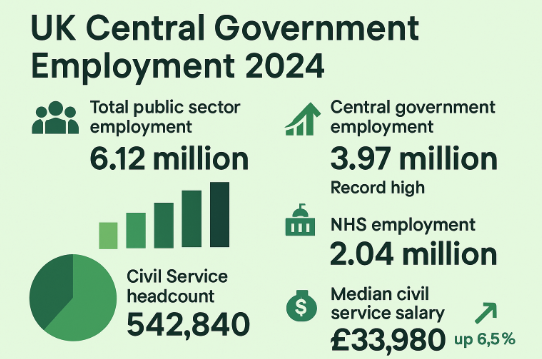
You’re managing complex payroll for civil servants across multiple pay bands, wrestling with procurement regulations that change more often than prime ministers, keeping IT systems secure enough to handle sensitive government data, and processing payments for staff who work everything from standard hours to emergency response across multiple locations. Meanwhile, central government employment has reached a record high of 3.97 million people, meaning more pressure, more complexity, and more opportunities to get things catastrophically wrong. Most UK BPO providers will tell you they can handle “any sector.” That’s like saying a Swiss Army knife can perform brain surgery (technically it has sharp bits, but you probably don’t want to test it on the nation’s critical infrastructure).
Central government departments need back-office support for central government that understands the specific madness of running the machinery of state. That means HR systems that track security clearances and mandatory training, finance processes that handle complex budget allocations and parliamentary scrutiny, IT infrastructure that meets government cybersecurity standards, and government payroll services in the UK that navigate civil service pension schemes whilst calculating overtime for emergency response teams.
Here’s the uncomfortable truth: most BPO providers have never dealt with a National Audit Office investigation, don’t understand why a Grade 7 policy advisor’s pension contributions are different from a Senior Executive Officer’s, and think “framework compliance” is something you hang pictures on. We’re different. We built our services specifically for the beautiful chaos of central government operations.
The Reality of Central Government Operations
Most BPO providers will promise they can manage this complexity. They can’t. They’ll give you separate systems for each function and expect you to make them work together. When they inevitably fail, they’ll blame your “unique requirements” rather than admitting their solutions weren’t built for government.
The UK civil service employs 542,840 people across government departments, with the five largest departments—Ministry of Justice, Department for Work and Pensions, HM Revenue and Customs, Ministry of Defence, and Home Office—accounting for 68.1% of the workforce. Your department exists in this space, which means you’re constantly managing:
A newly qualified civil servant working in London has different rates, different pension contributions, and different tax implications than an experienced officer working in Manchester. Add security clearance allowances, unsocial hours payments, and emergency response overtime, and you have payroll requirements that generic systems simply can’t handle. The median civil service salary increased to £33,980 in 2024, up £2,060 or 6.5% from 2023, but the complexity of calculating and processing these payments continues to grow.
Outsourced HR for Central Government
Government employees aren’t like other workers. They have security clearances that need maintaining, mandatory training that updates constantly, and compliance requirements that can change overnight when new policies are introduced. Your outsourced HR for central government entities function needs to handle this complexity whilst supporting recruitment, retention, and performance management in a sector where 73.8% of civil servants now work at Executive Officer grade and above, reflecting the increasingly senior nature of government work.
Security clearance tracking that actually work
Our HR system doesn’t just store employee records—it actively monitors security clearances, mandatory training renewals, and professional development requirements. When a civil servant’s Developed Vetting needs updating, the system flags it months in advance and tracks the renewal process through completion. When new mandatory training requirements are introduced following policy changes, the system automatically identifies which staff need updating and manages the compliance process.
Recruitment and onboarding that reduces time-to-placement
Getting a new civil servant from application to first day can take months with manual processes, particularly when security clearances are involved. Our HR system automates document collection, compliance checking, and approval workflows, reducing onboarding time whilst maintaining the rigorous standards government requires. That means faster placements, better service delivery, and improved budget management.
Performance management that supports retention
Government workers have options, and good ones are increasingly scarce. There were 63,330 entrants to the Civil Service in 2023/24, up from 56,760 in 2022/23, but retention remains critical. Our HR analytics help you identify retention risks, track performance across different roles, and implement interventions before valuable staff leave for other departments or the private sector. The system tracks feedback from line managers, identifies training needs, and supports career development planning that keeps staff engaged.
Workforce planning that anticipates demand
Central government faces unique staffing challenges, with headcount increasing across all regions but the largest increase in North West England. Our HR system helps you anticipate demand patterns, identify skill gaps, and plan recruitment strategies that position your department ahead of competitors for the best talent.
Finance and Accounting That Handles Government Complexity
Government finance isn’t like other business finance. Budget allocations vary wildly between programmes, reporting requirements change constantly, and financial management requires understanding the specific rhythms of parliamentary cycles and Treasury controls. Your finance and accountancy for public sector function needs to handle this complexity while providing real-time visibility into departmental performance and maintaining the transparency that parliamentary democracy demands. ere’s what you need:
Automated budget management that handles multiple funding streams
Different budget lines have different requirements—some need detailed expenditure tracking, others require specific approval workflows, and many have strict deadlines for spending and reporting. Our finance system handles this complexity automatically, generating compliant reports, tracking spending against budgets, and managing the entire financial process without manual intervention. The system integrates with government financial management systems and provides the audit trails that parliamentary scrutiny requires.
Cash flow management that understands government cycles
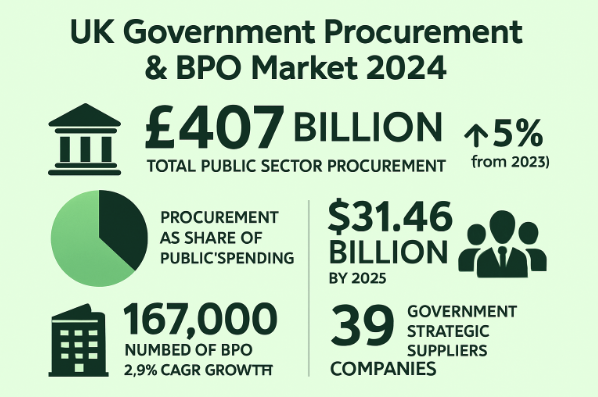
Government departments don’t receive funding like commercial businesses. Public sector procurement spending of £407 billion represents approximately one-third of total public spending, but payment timing can vary significantly between programmes and suppliers. Our finance system provides real-time cash flow forecasting that accounts for these variations, helping you manage working capital and plan for programme delivery without running into liquidity problems.
Real-time budget analysis that drives decisions
You need to know which programmes are overspending, which budget lines are underutilised, and where your department is heading financially. Our finance system provides real-time budget analysis across all funding sources, with drill-down capabilities that help you understand spending patterns at every level of your organisation. The system provides the management information that ministers and permanent secretaries need to make informed decisions.
Procurement-to-payment integration that ensures compliance
From initial procurement through to final payment, our P2P system tracks every transaction, maintains audit trails, and ensures compliance with government procurement regulations. The system integrates with government procurement platforms, automates approval workflows, and provides complete visibility into the entire procurement cycle. With the UK BPO market set to reach $31.46 billion by 2025, having robust procurement processes is essential for managing supplier relationships effectively.
Grant and programme management that ensures delivery
From initial allocation through to final reporting, our system tracks every programme and grant, maintains audit trails, and ensures compliance with Treasury and departmental requirements. The system integrates with government reporting platforms, automates approval workflows, and provides complete visibility into programme delivery and outcomes.
IT Support for
Government Departments
That Meets National Security Standards
Healthcare IT isn’t just about keeping systems running—it’s about maintaining security standards that protect patient data, ensuring compliance with NHS Digital requirements, and providing integration capabilities that work with complex trust systems. Your IT infrastructure needs to support business growth while meeting the highest security and compliance standards. This is what you need from IT managed services and development:
Managed infrastructure that never goes down
Government departments can’t afford downtime. When ministers need briefings for parliamentary questions or civil servants need to process urgent policy responses, your systems need to be available 24/7. Our managed IT services ensure your infrastructure is always operational, always secure, and always compliant with government cybersecurity standards. We provide redundant systems, automated backups, and disaster recovery capabilities that keep your department running even when things go wrong.
Custom development that solves real problems
Every government department has unique workflows and specific requirements that off-the-shelf software can’t handle. Our development team creates bespoke solutions that integrate with your existing systems while improving efficiency and reducing manual work. Whether it’s custom reporting for parliamentary questions, workflow automation for policy development, or integration with cross-government systems, we build solutions that solve your specific problems.
Cybersecurity that protects everything.
Government data requires the highest levels of protection, and cyber threats targeting government organisations are increasing. Our security services ensure your systems meet Cabinet Office standards, maintain ISO27001 compliance, and protect against the specific threats that target government departments. We provide continuous monitoring, threat detection, and incident response capabilities that keep your data safe and maintain public trust.
AI and automation that works around the clock
Repetitive tasks like document processing, compliance checking, and report generation can be automated using intelligent systems that learn from your processes and improve over time. Our AI-powered automation handles routine tasks, identifies patterns and anomalies, and provides predictive insights that help you make better policy and operational decisions.
Government Payroll Services for
Civil Service Complexity
Government payroll isn’t just about calculating wages—it’s about navigating civil service pension schemes, handling complex pay scales, managing allowances and overtime, and ensuring accuracy in an environment where mistakes can have serious consequences for both staff morale and parliamentary accountability. Your government payroll services function needs to handle this complexity whilst providing real-time visibility and maintaining complete compliance with Treasury and departmental requirements.
Civil service pension compliance that actually works
The Civil Service Pension Scheme is complex, constantly changing, and carries serious penalties for non-compliance. With 16.6% of civil servants from ethnic minority backgrounds and 16.9% declaring disabilities, ensuring equitable pension treatment across diverse workforces is critical. Our payroll system actively monitors pension requirements, tracks changes in contribution rates, and ensures compliance across all government staff.
Complex pay scale calculations that handle every scenario
A newly qualified civil servant in London has different rates than an experienced officer in Manchester. Add security clearance allowances, unsocial hours payments, and emergency response overtime, and you have complexity that generic payroll systems can’t handle. Our system manages all these variations automatically, ensuring accurate payments every time whilst maintaining the audit trails that government requires.
Real-time processing that supports government agility.
When an emergency response requires additional staffing or a minister needs urgent briefing support, you need to process it immediately. Our payroll system handles real-time rate calculations, compliance checking, and payment processing, enabling you to respond quickly to urgent requirements whilst maintaining complete accuracy and compliance.
Integration with government systems that eliminates double-entry
Many government departments use specific HR and finance systems that require particular data formats and approval workflows. Our payroll system integrates directly with these platforms, eliminating manual data entry and ensuring consistency across all systems. The system works with existing government infrastructure whilst providing the flexibility to adapt to changing requirements.
Statutory payment management that handles complexity
From maternity pay to sick pay, statutory payments in government involve complex calculations and strict compliance requirements. Our system handles all statutory payments automatically, ensuring compliance and accuracy whilst maintaining the detailed records that parliamentary accountability requires.
Why Generic BPO Doesn't Work for Central Government
Most BPO providers will tell you their systems can handle “any sector.” That’s corporate speak for “we’ve never actually worked in your sector, but we’re confident our generic systems will somehow work.”
Central government departments have specific requirements that generic BPO simply can’t handle:
Regulatory complexity that requires specialist knowledge
HR compliance for government workers involves security clearances, mandatory training, and accountability requirements that don’t exist in other sectors. Finance processes need to handle parliamentary scrutiny and Treasury controls. IT systems need to meet national security standards. Payroll needs to navigate civil service pension schemes whilst handling complex government pay structures.
Integration requirements that demand government expertise
Government departments use specific systems, have particular reporting requirements, and need data in formats that work with cross-government platforms. Generic BPO providers require expensive customisation to work with government processes. Our systems are designed for government integration from the ground up.
Scale and reliability that can't afford failure
When you’re providing services that affect millions of citizens, your BPO systems can’t go down. Ever. Generic providers might be fine for most businesses, but “most businesses” don’t have parliamentary questions, ministerial briefings, and public accountability depending on their operations.
The Real Cost of
Getting BPO Wrong
Let’s talk about what happens when government BPO goes wrong, because it’s not just about inconvenience—it’s about consequences that can damage public trust and democratic accountability. Here’s what it can cost you and everyone involved:
Parliamentary scrutiny that can end careers
Get HR compliance wrong and face Public Accounts Committee hearings. Get finance wrong and face Treasury investigations. Get IT security wrong and face national security implications. Get payroll wrong and face industrial action. In government, compliance failures don’t just cost money—they can end political careers and damage public confidence in democratic institutions.
Audit failures that create lasting damage
The National Audit Office doesn’t just review your processes—they publish their findings for parliamentary and public scrutiny. One significant failure can damage your department’s reputation for years and affect future budget allocations. Building audit confidence takes time; losing it takes one compliance mistake.
Staff retention problems that compound over time
Government workers have options, and good ones are increasingly scarce. If your BPO operations are unreliable (late payments, compliance issues, poor communication) they’ll work for departments or private sector organisations that get it right. Losing good staff because of operational problems is expensive stupidity that affects service delivery to citizens.
Public trust damage that's hard to repair
Citizens expect government to work efficiently and transparently. When BPO failures affect service delivery or waste taxpayer money, the damage to public trust extends far beyond your department. Rebuilding that trust requires years of consistent performance and transparent accountability.
See How Integrated BPO Actually Works for Government
We could keep telling you how brilliant our integrated approach is, but that’s not particularly useful. What’s useful is seeing it work with your actual data, your actual requirements, and your actual problems.
The Integrated Advantage:
Why Separate Systems Fail Government
Here’s what most BPO providers won’t tell you: separate systems for HR, finance, IT, and payroll create more problems than they solve, especially in government where accountability and transparency are paramount.
Data inconsistency that creates audit nightmares
When your HR system says one thing, your payroll system says another, and your finance system has a third version of the truth, you’re not just dealing with operational problems—you’re creating audit failures that can trigger parliamentary investigations. Our integrated approach ensures single-source data truth across all functions.
Manual processes that waste taxpayer money
Every time data needs to be transferred between separate systems, someone has to do it manually. That’s not just inefficient—it’s expensive and error-prone. With 167,000 BPO businesses in the UK growing at 2.9% annually, the market is competitive, but integration quality varies dramatically.
Compliance gaps that create risk
When systems don’t talk to each other, compliance checking becomes a manual process. Manual processes fail, especially under pressure. Our integrated systems provide automated compliance checking across all functions, reducing risk and ensuring consistent standards.
Reporting complexity that frustrates ministers
Ministers need clear, consistent information for parliamentary questions and policy decisions. Separate systems create reporting complexity that makes it harder to provide the clear answers that democratic accountability requires. Our integrated reporting provides single-source truth for all ministerial and parliamentary requirements.
Future-Proofing Your Department's Operations
Government doesn’t stand still, and neither should your BPO systems. The challenges facing central government are evolving, and your operational support needs to evolve with them.
Demographic changes that affect workforce planning
The median age of civil servants is 44 years, and retirement patterns will create significant recruitment challenges over the next decade. Our HR systems help you anticipate these changes and plan accordingly.
Technology changes that affect service delivery
Citizens expect digital services that work seamlessly across government. Your BPO systems need to support this digital transformation whilst maintaining the security and compliance standards that government requires.
Budget pressures that demand efficiency
Public spending faces increasing scrutiny, and departments need to demonstrate value for money. Our integrated approach reduces costs whilst improving service quality, providing the efficiency gains that Treasury demands.
Regulatory changes that affect compliance
Government regulations change constantly, and your BPO systems need to adapt quickly. Our systems are designed for regulatory flexibility, ensuring compliance even when requirements change.
Getting Started:
The PEGroup Difference
We’re not like other BPO providers. We don’t promise everything to everyone. We focus specifically on what government needs: integrated, compliant, secure, and reliable business process outsourcing that understands the unique requirements of central government operations.
Our approach is different because we understand that government isn’t just another business sector—it’s the foundation of democratic society, and it deserves BPO services that reflect that importance.
1
Government-specific expertise
Our team includes former civil servants, government contractors, and specialists who understand the unique challenges of central government operations. We don’t just know the regulations, we understand why they exist and how to work with them effectively.
2
Proven integration capabilities
Our systems are designed from the ground up to work with government infrastructure, reporting requirements, and compliance standards. We don’t retrofit commercial solutions—we build government solutions that work.
3
Transparent accountability
We provide the audit trails, reporting capabilities, and transparency that government requires. Our systems support parliamentary accountability and public scrutiny because we understand that’s not just a requirement—it’s a responsibility.
4
Scalable reliability
Whether you’re a small agency or a major department, our systems scale to meet your needs whilst maintaining the security and compliance standards that government demands.
The choice isn’t between different BPO providers—it’s between systems that understand government and systems that don’t. We understand government because we built our services specifically for the unique challenges of central government operations.
Contact Us
To see how integrated BPO can transform your department’s operations whilst maintaining the standards that democratic accountability requires.